
Octenidine is an antiseptic ingredient. CHG means chlorhexidine gluconate, a different ingredient family.
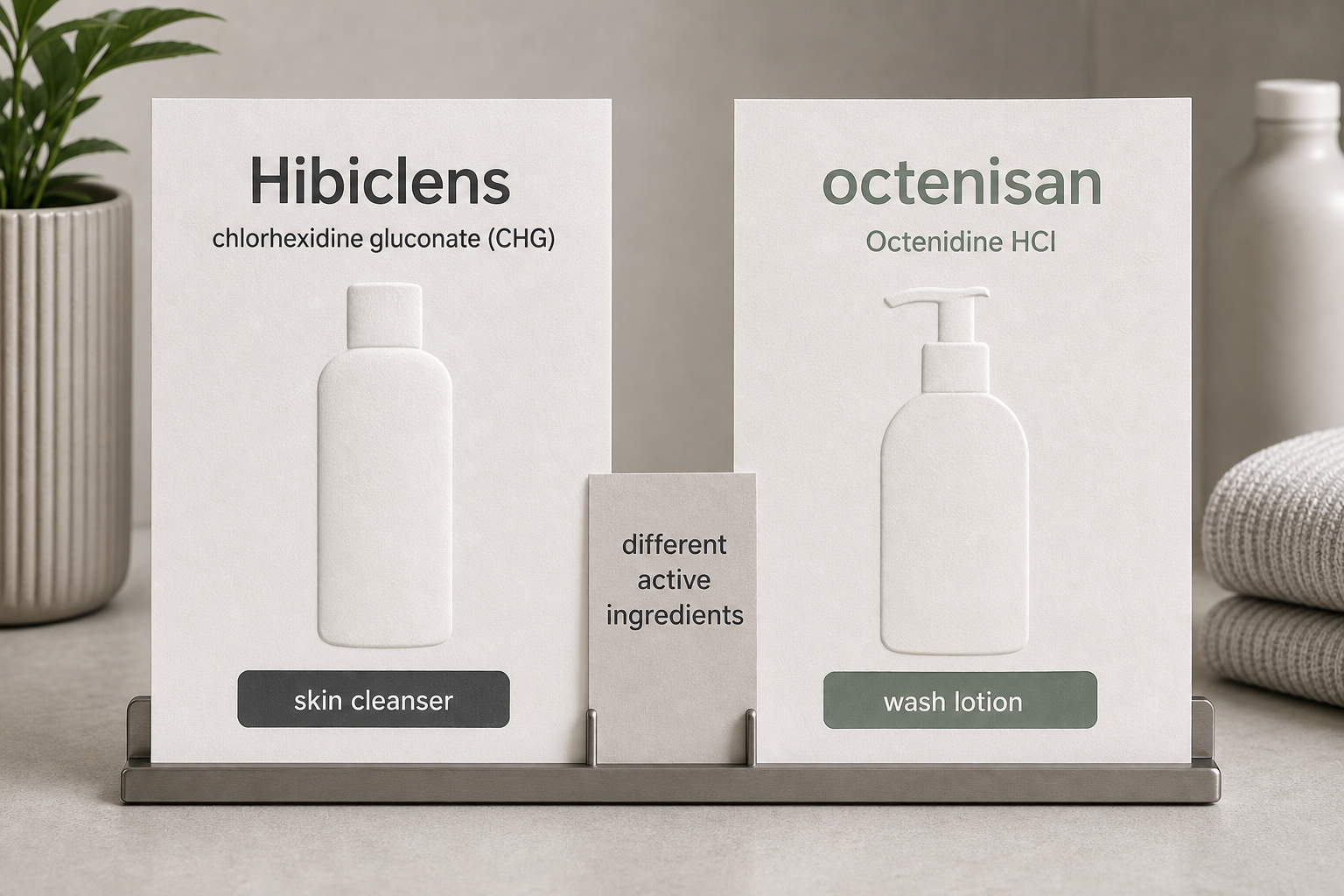
If you are trying to place it next to a familiar product, start here: Hibiclens is a chlorhexidine gluconate skin cleanser. octenisan is an octenidine-based wash lotion. Same broad antiseptic conversation, different active-ingredient names.
Quick Label Comparison
| Hibiclens / CHG | octenisan / Octenidine HCl | |
|---|---|---|
| Active ingredients | Chlorhexidine gluconate 4%, often shortened to CHG. | Octenidine HCl appears in the ingredients. |
| Product type | A skin cleanser label. | A wash-lotion product label. |
| What it helps you notice | CHG points to chlorhexidine. | Octenidine HCl points to the octenidine ingredient family. |
| Best next check | Read the exact Hibiclens or CHG product label. | Read the exact octenisan or octenidine product label. |
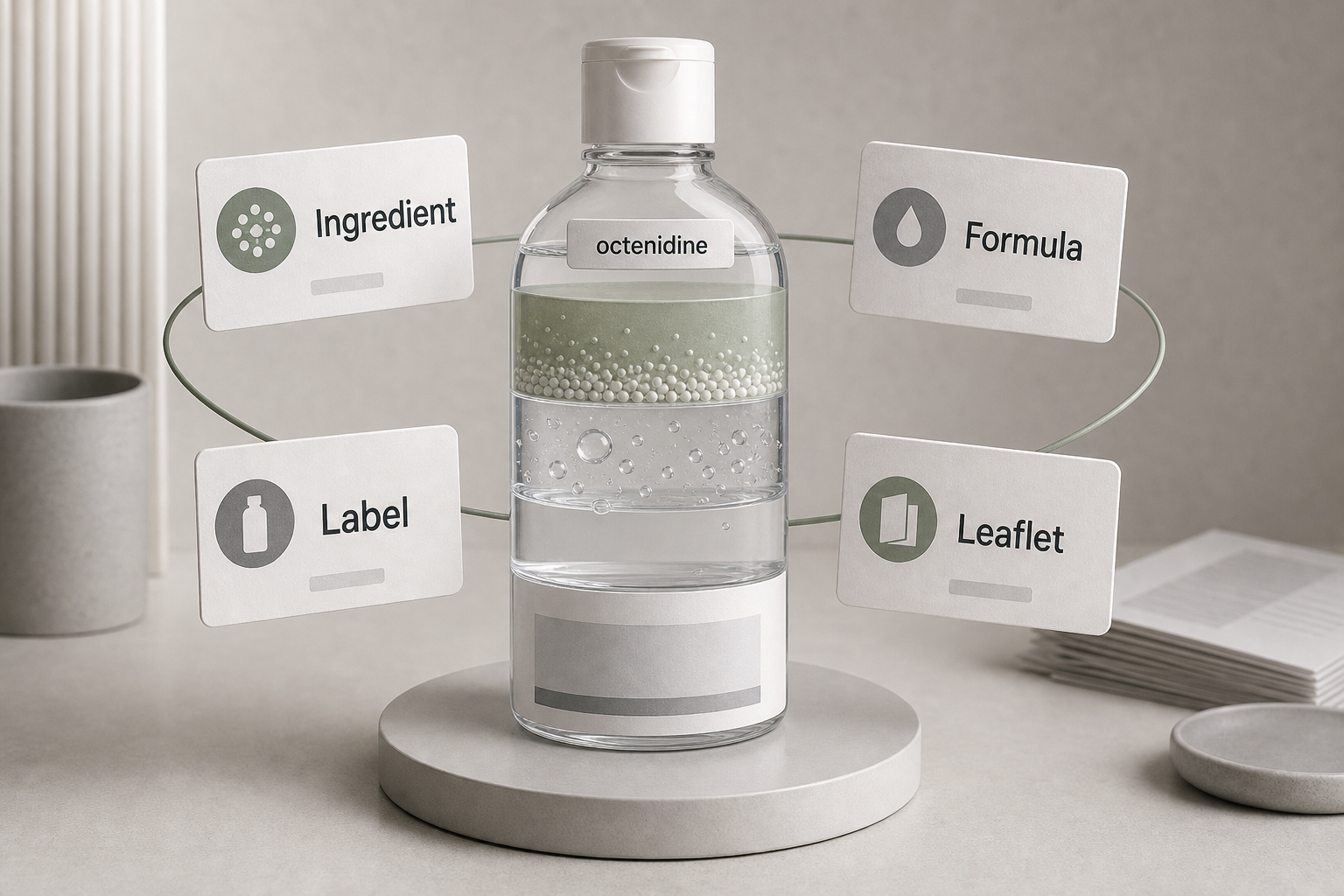
Next, ask where you saw the word octenidine. The ingredient name helps you recognize the family. The label or leaflet tells you what the bottle, rinse, wash, gel, or ingredient list is actually for.
Start With The Ingredient Name
In chemical records, octenidine can mean the free-base or active-moiety record. Product labels and regulator records often use salt wording such as octenidine hydrochloride, octenidine dihydrochloride, or Octenidine HCl.
That name match helps when one label says “Octenidine HCl” and another page says “octenidine dihydrochloride.”
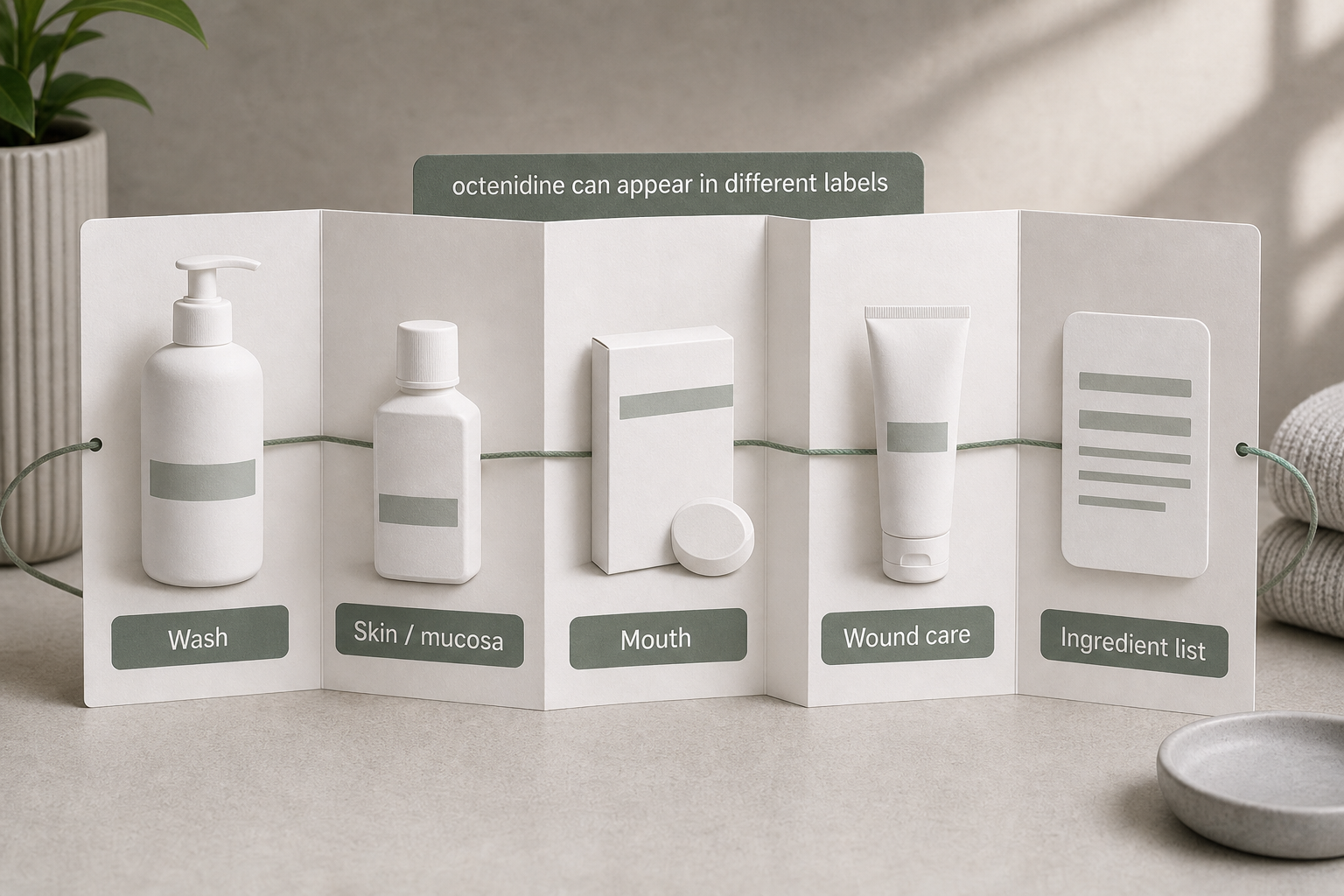
The match is only the starting point. A finished product may be a skin antiseptic, a mouth product, a wash, a wound-care product, an alcohol-based skin prep, or a cosmetic ingredient list. Those products can have different formulas, directions, and warnings.
Why It May Sound Unfamiliar In The U.S.
Octenidine is not new. Research papers discussed it decades ago, and product documents in Europe and Australia include octenidine-containing medicines and antiseptic products under names such as Octenisept and Octeangin.
It can still feel unfamiliar in the U.S. because chlorhexidine is the antiseptic name many people see first. Hibiclens is a chlorhexidine gluconate skin cleanser. ChloraPrep combines chlorhexidine gluconate with isopropyl alcohol for skin preparation. Chlorhexidine 0.12% oral rinse is a dental product. Octenidine is part of the same broad conversation about antiseptic ingredients, but those products answer different questions.
Product Names You May Hear
Octenidine product names vary by country and formulation. These examples help put the name in context.
Examples You Might See
| Example | What to notice | |
|---|---|---|
| Octenisept | A non-U.S. octenidine product name used for some skin, wound, or mucous-membrane antiseptic products. | Look for the exact product and country. |
| Octeangin / Octenidine lozenges | Mouth or throat product names in European listings. | Mouth products have their own directions and warnings. |
| octenisan | A wash-lotion product family that can list Octenidine HCl. | Wash products answer different questions than wound or mouth products. |
| octeniderm | An alcohol-based skin-prep product name. | Alcohol content, flammability, and procedure context matter. |
| Octenidine in deodorant ingredient lists | Some U.S. deodorant ingredient lines list Octenidine HCl. | The product category and ingredient role still matter. |
When It Appears On A Deodorant Ingredient List
Some U.S. readers first notice Octenidine HCl on a deodorant ingredient list. Some disclosures list it with a product role such as antimicrobial or preservative.
One U.S. underarm-product page describes a rinse-off underarm cleanser with Octenidine HCl. Read that as a product-specific ingredient-list example, not as a general medical antiseptic claim.
How CHG Examples Help
CHG is short for chlorhexidine gluconate. Hibiclens, ChloraPrep, and chlorhexidine oral rinse labels are familiar U.S. examples of chlorhexidine products. They give you a known comparison point when octenidine sounds unfamiliar.
FDA has warned about rare but serious allergic reactions with chlorhexidine gluconate skin antiseptic products. If you have reacted to Hibiclens, ChloraPrep, CHG, or another antiseptic before, say that clearly when you talk with a pharmacist or doctor.
When To Ask A Professional
Some questions need a person who knows the situation: wounds, procedures, allergy history, pregnancy, children, mouth use, eye or ear exposure, or a reaction.
For those questions, show the product or leaflet to a pharmacist, dentist, doctor, or local poison-control service. You do not need to memorize the chemistry.
Common questions
Is octenidine the same thing as Hibiclens?
Hibiclens is a chlorhexidine gluconate skin cleanser. Octenidine is a separate ingredient, so compare the exact products rather than the names alone.
Is octenidine an antibiotic?
No. Octenidine is discussed here as an antiseptic ingredient. Antibiotics are medicines used for some bacterial infections.
If a deodorant lists octenidine, does that make it an antiseptic product?
The product category still matters. Deodorants, underarm cleansers, wound products, oral products, and procedure skin preps answer different questions.
Why do some labels say octenidine HCl and others say octenidine dihydrochloride?
Those are related name forms. The name match helps you recognize the ingredient; the finished product label still carries the directions and warnings.
Can I switch from chlorhexidine to octenidine if I dislike CHG or had a reaction to it?
Treat any past antiseptic reaction as important history. Tell a clinician or pharmacist what happened and show them the exact product label before considering a different antiseptic ingredient.
Is octenidine sold over the counter in the United States?
Octenidine HCl appears in some U.S. cosmetic ingredient listings. The medical antiseptic examples discussed here mostly come from non-U.S. product contexts, so use a current U.S. label or pharmacist for U.S.-specific questions.
Related Reading
For a quick product-context overview, read What is octenidine used for?. For a tour of product names, read The octenidine product family, in plain English. For a side-by-side look at common chlorhexidine examples, see Octenidine vs chlorhexidine: what to know. For the broader category language around antiseptics, disinfectants, and sanitizers, see Antiseptic, antibiotic, disinfectant, sanitizer: a quick map.
References
Last reviewed on 2026-05-22. References below cover ingredient names, CHG examples, underarm product pages, deodorant ingredient listings, and Poison Help.