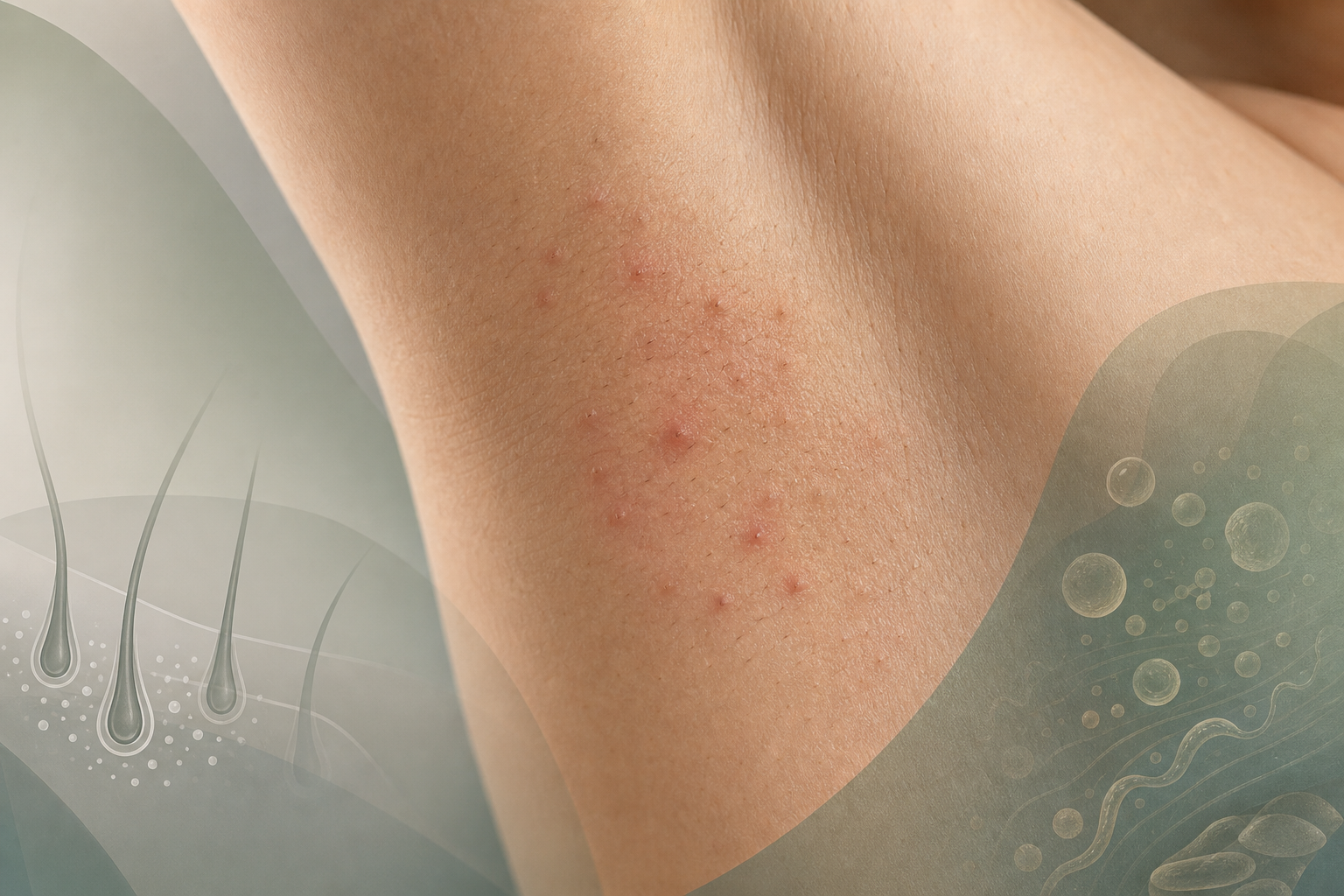
Maybe, but clear up is too strong as a promise. Octenidine and chlorhexidine can reduce microbes on skin when they are in the right finished product. Folliculitis is not always the same microbe problem.
Folliculitis means inflamed hair follicles. It can involve staph bacteria, other bacteria, yeast or fungi, hot-tub exposure, shaving, friction, blocked follicles, irritated skin, or a condition that only looks like folliculitis. A wash that helps one situation can miss another.
For a few itchy bumps after shaving, the label and skin tolerance matter. For painful, spreading, draining, recurrent, or underarm bumps that keep returning, the better next step is a clinician or pharmacist conversation with the product label in hand.
What Folliculitis Means
Folliculitis is inflammation around hair follicles. It can happen when follicles are damaged, blocked, inflamed, or infected.
That is why the same word can cover different-looking problems: small itchy bumps after shaving, hot-tub-related bumps, bacterial folliculitis, yeast-related folliculitis, or a deeper boil-like infection. Bacterial folliculitis often involves Staphylococcus aureus, but the real-life question is still the same: what is causing these bumps on this body site?
When It Looks More Like A Boil Or Abscess
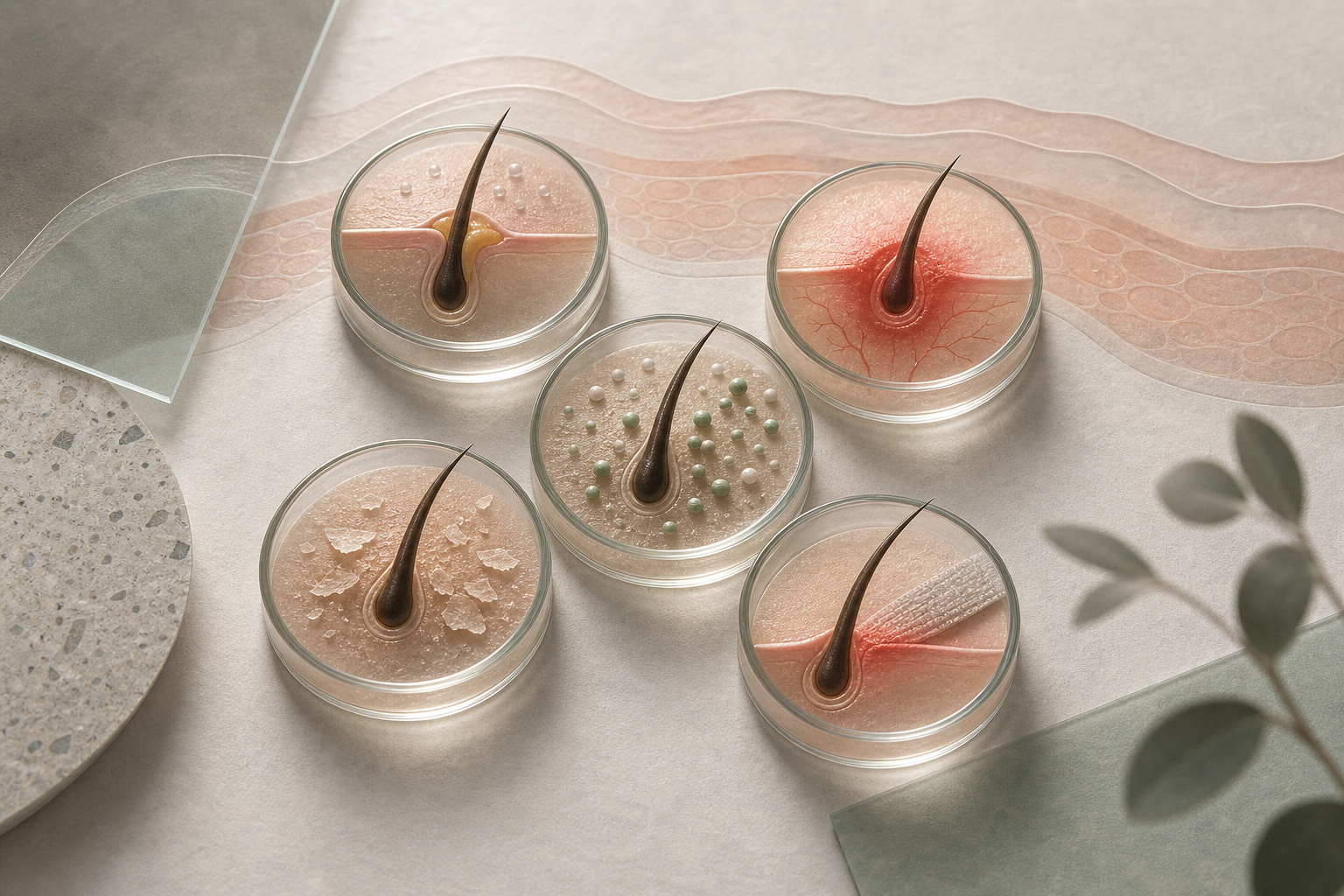
A small irritated follicle and a deeper painful lump are not the same product question. A boil, also called a furuncle, is a deeper infection around a hair follicle and nearby skin tissue. A carbuncle is a larger connected group of infected follicles. A skin abscess is a pocket of pus in or on the skin.
That distinction matters because antiseptic washes act on skin surfaces under their label conditions. They do not drain an abscess, replace a culture, or tell you whether the cause is Staphylococcus aureus, MRSA, yeast, a hot-tub organism, irritation, an inflamed cyst, hidradenitis suppurativa, or something else. Pain, warmth, pus, spreading redness, fever, a deep lump, or a spot that keeps returning should move the question from “which wash?” to “what is this, and does it need exam, culture, drainage, or medicine?”
Where Chlorhexidine Fits
Chlorhexidine fits the conversation because it is an antiseptic ingredient used in skin cleansers. The U.S. DailyMed label for Hibiclens lists chlorhexidine gluconate solution 4.0% w/v and gives the purpose as antiseptic.
That explains why people ask about it for folliculitis. If bacteria are part of the problem, an antiseptic wash might be part of a clinician’s plan.
Read the label closely. Hibiclens is not the same thing as a leave-on deodorant, acne medicine, antibiotic ointment, or fungal treatment. Its label also has warnings about sensitive body sites and allergic reactions. That matters in armpits and skin folds, where irritation can already be part of the problem.
The Infectious Diseases Society of America guideline discusses chlorhexidine washes in a recurrent S. aureus decolonization context, paired with other measures such as nasal mupirocin and household decontamination. That is a clinician-plan setting, not a reason to build a routine from a product name.
Where Octenidine Fits
Octenidine fits in a similar but not identical way. It is an antimicrobial ingredient that appears in some skin, wound, and hygiene products outside the usual U.S. drugstore chlorhexidine lane.
For example, octenisan wash lotion is an octenidine-containing wash-lotion product page. That page is useful for understanding one octenidine wash context. It does not turn octenidine into a general at-home folliculitis treatment.
Also separate the ingredient from the finished product. An FDA ingredient record can confirm a name such as octenidine hydrochloride. It does not tell you that a particular wash is right for armpit bumps, shaving bumps, yeast folliculitis, or recurrent infections.
Why Ingredient Names Are Not Treatment Plans
“Chlorhexidine” and “octenidine” are useful words to find on a label. They are not enough to decide what to do at home.
The missing details are the details that matter: the body site, whether the skin is intact or broken, whether the product is rinse-off or leave-on, the warning section, allergy history, country and product status, and whether the bumps are folliculitis, a boil, an abscess, irritation, or recurrent staph. A clinician may also need to know whether anything has been cultured and whether the question is active infection, colonization, recurrence, or skin irritation.
Same Bumps, Different Product Jobs
Folliculitis Product Questions
| What it may help with | What it may miss | |
|---|---|---|
| Chlorhexidine skin cleanser | Bacterial skin burden in the right body-site and label context. | Yeast or fungal folliculitis, ingrown hairs, irritation, abscesses, or product reactions. |
| Octenidine wash product | Antimicrobial washing in the specific product context described by its label or product page. | A personal diagnosis, U.S. product status, or proof that it clears folliculitis. |
| Antibiotic or antifungal medicine | A clinician-matched bacterial, yeast, or fungal problem. | Routine cleansing, shaving friction, clothing friction, or recurrence pattern by itself. |
| Boil or abscess care | A clinician can decide whether culture, drainage, or medicine is needed. | A surface-wash comparison cannot answer a deep lump or pus-pocket question. |
| Deodorant or underarm cleanser | Odor, residue, or daily underarm product fit. | Painful, draining, deep, recurrent, or infected bumps. |
Armpit Folliculitis Needs Extra Caution
The armpit is warm, folded, sweaty, and often shaved or exposed to deodorant, fragrance, antiperspirant, fabric friction, and cleanser residue. That makes it easy to blame every bump on bacteria and reach for a stronger antimicrobial wash.
Sometimes that is the wrong direction. If the skin is irritated, raw, allergic, or inflamed from friction, a harsh or poorly matched product can add another problem. If the bumps are deep, very painful, draining, spreading, or coming back, they may need an exam and sometimes a culture.
If you are comparing octenidine and chlorhexidine for armpit bumps, do not start with “which one is stronger?” Start with “what are these bumps?”
When Recurrence Becomes A Staph Or MRSA Question
If bumps keep coming back, the question changes. It may still be folliculitis, but it may also be recurring boils, recurrent abscesses, colonization, household spread, irritation that keeps being mistaken for infection, or another diagnosis.
MRSA is not something you can confirm by how a bump looks. A culture result can change antibiotic choices and follow-up. Decolonization is also not a cleanser swap; it is a clinician-directed plan for a specific recurrence pattern, sometimes involving skin, nose, household items, or close contacts. Do not build that plan from an ingredient name or a search result.
So, Can They Clear It Up?
Sometimes an antiseptic wash can be useful. But the honest answer is that octenidine or chlorhexidine cannot be counted on to clear folliculitis by ingredient name alone.
They make the most sense when a clinician or pharmacist agrees that a bacterial skin-wash approach fits the body site, product label, symptoms, and recurrence pattern. They make less sense when the issue is fungal or yeast-related, irritation, shaving trauma, ingrown hairs, a deeper infection, or a condition that only looks like folliculitis.
Common Questions
Common questions
Can Hibiclens clear folliculitis?
It may be part of a bacterial skin-cleansing plan, but Hibiclens is a chlorhexidine antiseptic skin cleanser, not a universal folliculitis treatment. Read its warnings and ask if the bumps are painful, spreading, draining, or recurring.
Can octenidine clear folliculitis?
An octenidine-containing wash may matter in some antimicrobial washing contexts, but a product page or ingredient record does not prove it will clear your folliculitis.
Can an antiseptic wash clear a boil?
Do not treat a painful boil or abscess as a simple wash-choice problem. A deeper lump, pus, spreading redness, fever, or recurrence may need exam, culture, drainage, or prescription treatment.
Do repeated bumps mean MRSA or decolonization?
Not by appearance alone. Recurring bumps may need a culture or clinician exam. Decolonization is a clinician-directed recurrence plan, not a routine you can assemble from chlorhexidine, octenidine, or mupirocin names.
Is armpit folliculitis different?
Armpits add sweat, shaving, deodorant residue, skin folds, friction, and irritation. That makes the body site and product label especially important.
Do I need an antibiotic or antifungal instead?
That depends on the cause. Bacterial, yeast, fungal, irritated, and ingrown-hair problems can need different approaches.
Should I keep using deodorant?
If bumps started after a new deodorant, fragrance, antiperspirant, or cleanser, mention that when you ask a clinician or pharmacist. Product irritation can look like a skin problem.
When should I stop guessing?
Stop guessing when bumps are painful, spreading, draining, feverish, deep, recurrent, near the face or eyes, or happening with diabetes, immune compromise, pregnancy, or an infant.
Related Reading
For the broader odor question, read Can octenidine or chlorhexidine eliminate body odor?. For recurrence patterns, see Staph keeps coming back. For product-name comparison, read Hibiclens, HibiScrub, and octenisan.
Sources And Review
Last reviewed on 2026-05-28. Sources include MedlinePlus folliculitis, boil, and skin-abscess information, Merck Manual Professional Edition folliculitis context, IDSA skin and soft tissue infection guidance, a DailyMed Hibiclens chlorhexidine label, Schulke octenisan wash-lotion information, an FDA octenidine hydrochloride ingredient record, and U.S. Poison Help exposure guidance. Editorial review is source review, not a personal medical review.