Octenidine and chlorhexidine can help with body odor when skin bacteria are part of the problem. The more realistic word is reduce.
Think of them as antimicrobial ingredients. In the right finished product, they can lower the bacterial side of odor. Sweat control is a different job; that is where antiperspirants come in.
The product matters more than the ingredient name. A GoodSweat underarm cleanser with Octenidine HCl, an octenisan wash lotion, and a Hibiclens chlorhexidine skin cleanser belong to different product categories.
Why Body Odor Happens
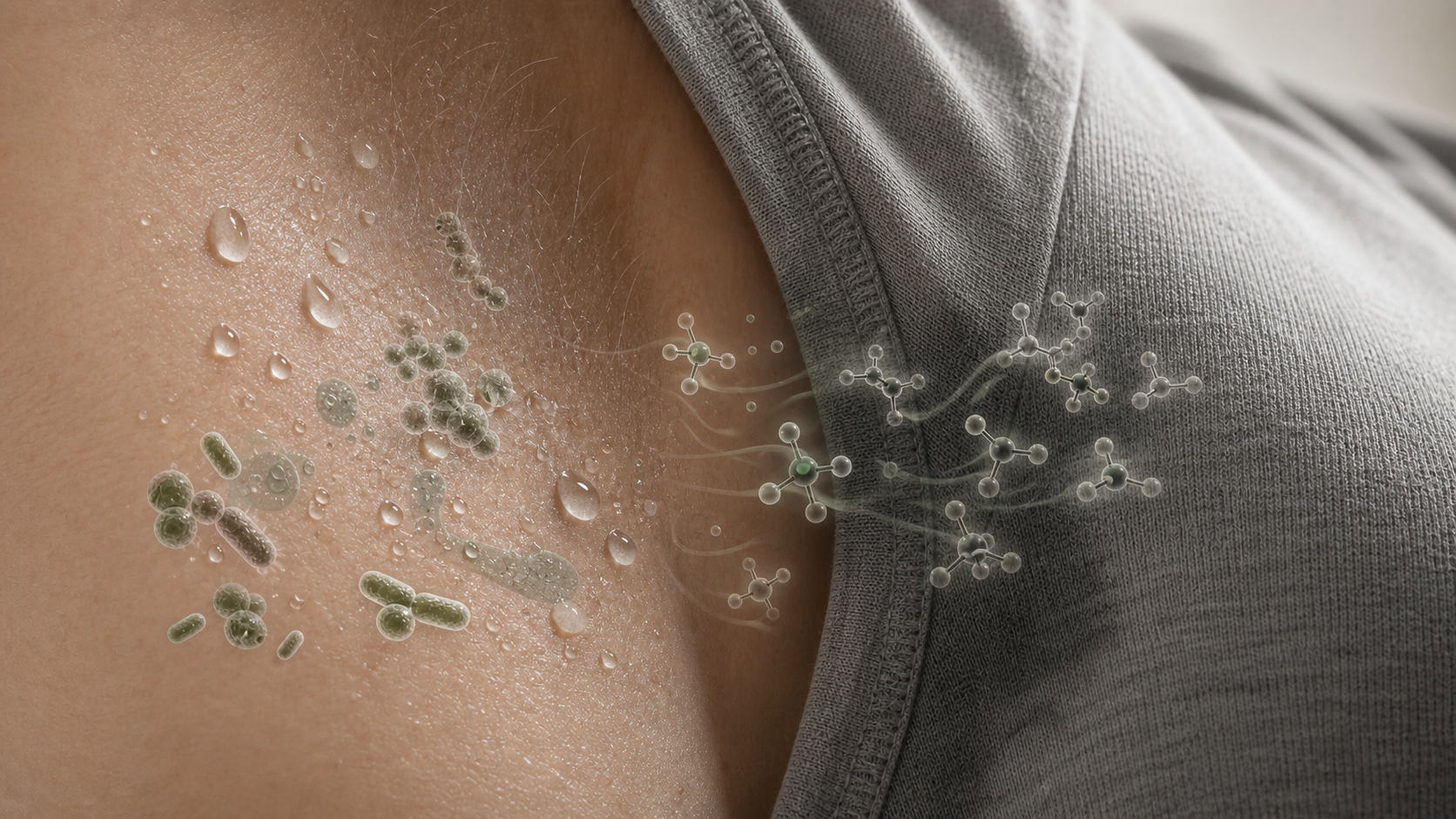
Sweat itself is not always the main smell. MedlinePlus puts it simply: sweat can cause a smell when it mixes with bacteria on your skin.
That is why antimicrobial ingredients come up in body-odor conversations. Some underarm odor chemistry involves skin bacteria turning sweat-related compounds into strong-smelling molecules. A Scientific Reports paper, for example, describes how certain staphylococci help make thioalcohols, a class of odor molecules involved in human body odor.
The real-life version is messier. Underarms have both sweat and scent-gland biology. Apocrine secretions are not the same as watery cooling sweat, and they can become smelly after skin microbes break them down. Eccrine sweat is mostly water, but heavy sweating can still change odor by keeping skin and fabric damp.
So odor depends on microbes, sweat amount, skin oils, clothing, washing, product residue, fragrance, diet, hormones, and the body site involved.

Where Octenidine Fits
Octenidine fits the body-odor question when it appears in a product designed for that use.
GoodSweat is the clearest consumer example. Its product page describes a 100 ml foaming underarm cleanser used in the shower. It lists Octenidine HCl with odor-binding minerals, describes the product as rinse-off, and positions it as an alternative to a daily deodorant layer.
That context matters: the product category, body site, and rinse-off format all point to ordinary underarm odor.
There are also octenidine wash products in more clinical or hygiene-focused contexts. For example, Schulke’s octenisan wash lotion page lists Octenidine HCl among the ingredients and describes a wash lotion for skin and hair washing. That is useful name context, but it is a different product category than GoodSweat.
Where Chlorhexidine Fits
Chlorhexidine usually enters the body-odor conversation through products like Hibiclens. In the U.S., the DailyMed label for Hibiclens lists chlorhexidine gluconate solution 4.0% w/v and gives the purpose as antiseptic.
That explains why people bring it up: chlorhexidine products can reduce bacteria on skin. Read Hibiclens in its own lane, though. It is an antiseptic skin cleanser, so the label context is different from a daily underarm product built specifically around odor.
Same Odor Question, Different Product Jobs
| What it can do | What it does not automatically do | |
|---|---|---|
| Octenidine underarm cleanser | May reduce odor by acting on the microbial side of underarm odor. | Still depends on formula, routine, body site, and whether odor is mainly microbial. |
| Chlorhexidine skin cleanser | Can reduce bacteria on skin in an antiseptic cleanser context. | Best read as an antiseptic cleanser unless a product is specifically labeled for ordinary odor. |
| Deodorant | Can reduce or cover odor with fragrance, absorbents, acids, or antimicrobial ingredients. | Sweat reduction is a separate antiperspirant job. |
| Antiperspirant | Can reduce sweating when it contains antiperspirant ingredients such as aluminum compounds. | Odor may still need cleansing, fabric, or deodorant logic. |
Deodorant, Antiperspirant, Or Antimicrobial Wash?
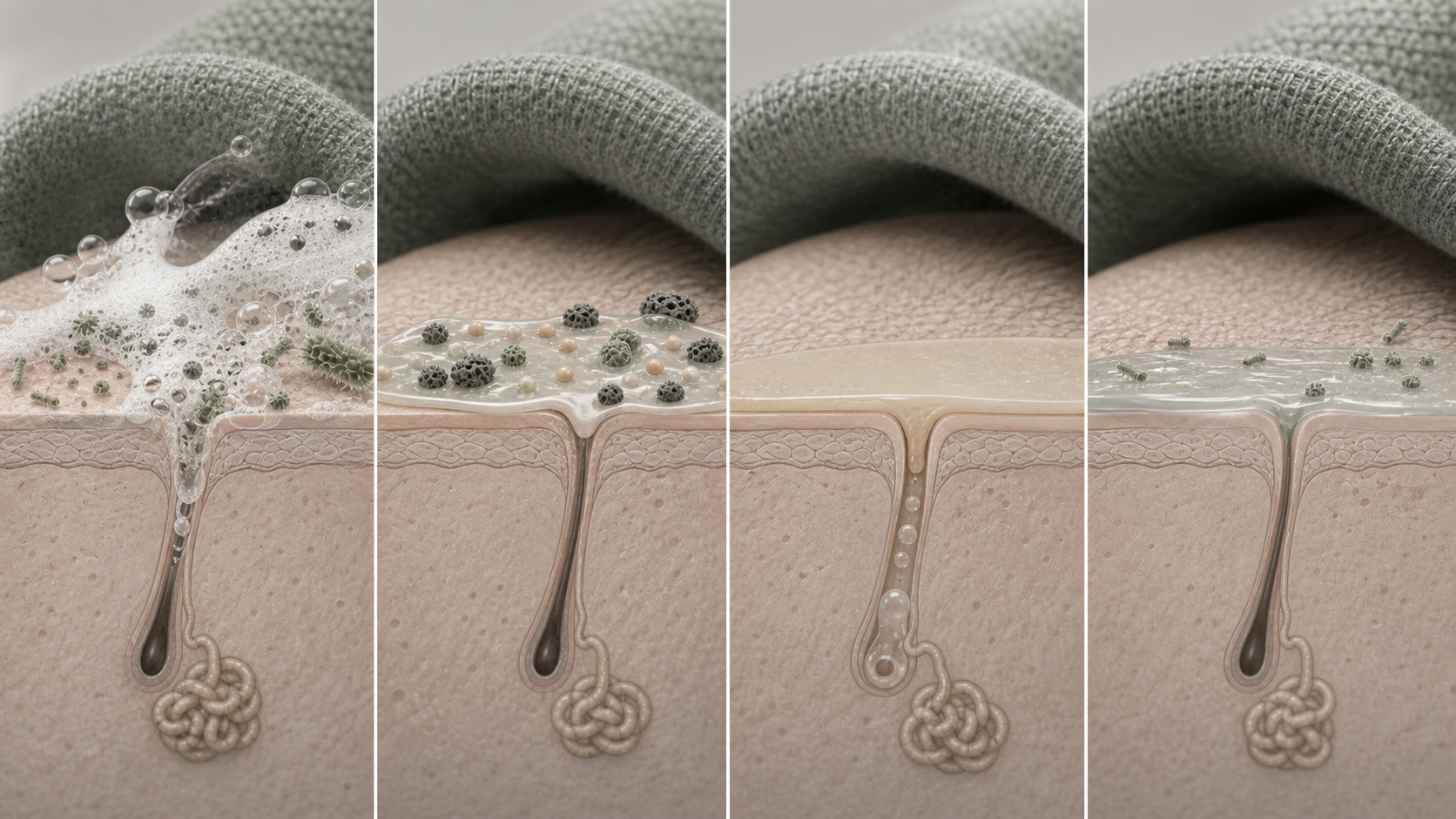
The American Academy of Dermatology explains the split clearly: deodorants can help reduce odor, but they do not reduce how much you sweat unless they contain antiperspirant ingredients such as aluminum chloride, aluminum chlorohydrate, or aluminum zirconium.
That distinction matters for both octenidine and chlorhexidine. Read the label by job before you read it by ingredient:
- Deodorant is an odor job. It may use fragrance, odor absorbers, acids, or antimicrobial ingredients, but it is not automatically a sweat-control product.
- Antiperspirant is a wetness job. The active ingredient line should name an antiperspirant active, usually an aluminum compound.
- Antimicrobial wash is a skin-cleansing job. It may reduce odor-related microbes under the right product conditions, but body site, rinse-off directions, contact time, and irritation warnings still matter.
- Antiseptic cleanser is a label-specific antiseptic job. A product like Hibiclens belongs in that lane unless its own label says something more specific about ordinary odor.
If the main problem is soaking wet shirts, sweat dripping, sweating at rest, night sweating, or a sudden sweat change, do not treat that as a deodorant comparison. MedlinePlus describes hyperhidrosis as excessive, unpredictable sweating, and sweating can also change with fever, medicines, hormones, thyroid or blood-sugar problems, and other health issues. That is a clinician or pharmacist question, not a reason to improvise with stronger antiseptic products.
So, Can They Eliminate Body Odor?
Not reliably. Reduce is the better word.
Octenidine or chlorhexidine may reduce odor when the odor is driven by skin microbes and the product is made for that body site. They are less likely to solve odor that is mainly from sweat volume, clothing buildup, diet, a skin condition, infection, hormones, medication, or a product that simply does not fit your skin.
For ordinary underarm odor, a product built for underarms is the cleanest comparison. GoodSweat is an octenidine example in that lane. Hibiclens is the chlorhexidine example here, but it sits in the antiseptic skin-cleanser lane.
What To Check On The Label
You do not need a complicated checklist. Look for five things:
- Product type: deodorant, antiperspirant, underarm cleanser, antiseptic wash, or something else.
- Active ingredient: Octenidine HCl, chlorhexidine gluconate, aluminum compound, fragrance, acid, absorbent, or another ingredient.
- Use format: rinse-off cleanser, leave-on stick, spray, cream, wipe, or wash.
- Body site: underarms, feet, groin, hands, whole body, procedure site, or another area.
- Main promise: odor, sweat, bacteria reduction, skin cleansing, or procedure prep.
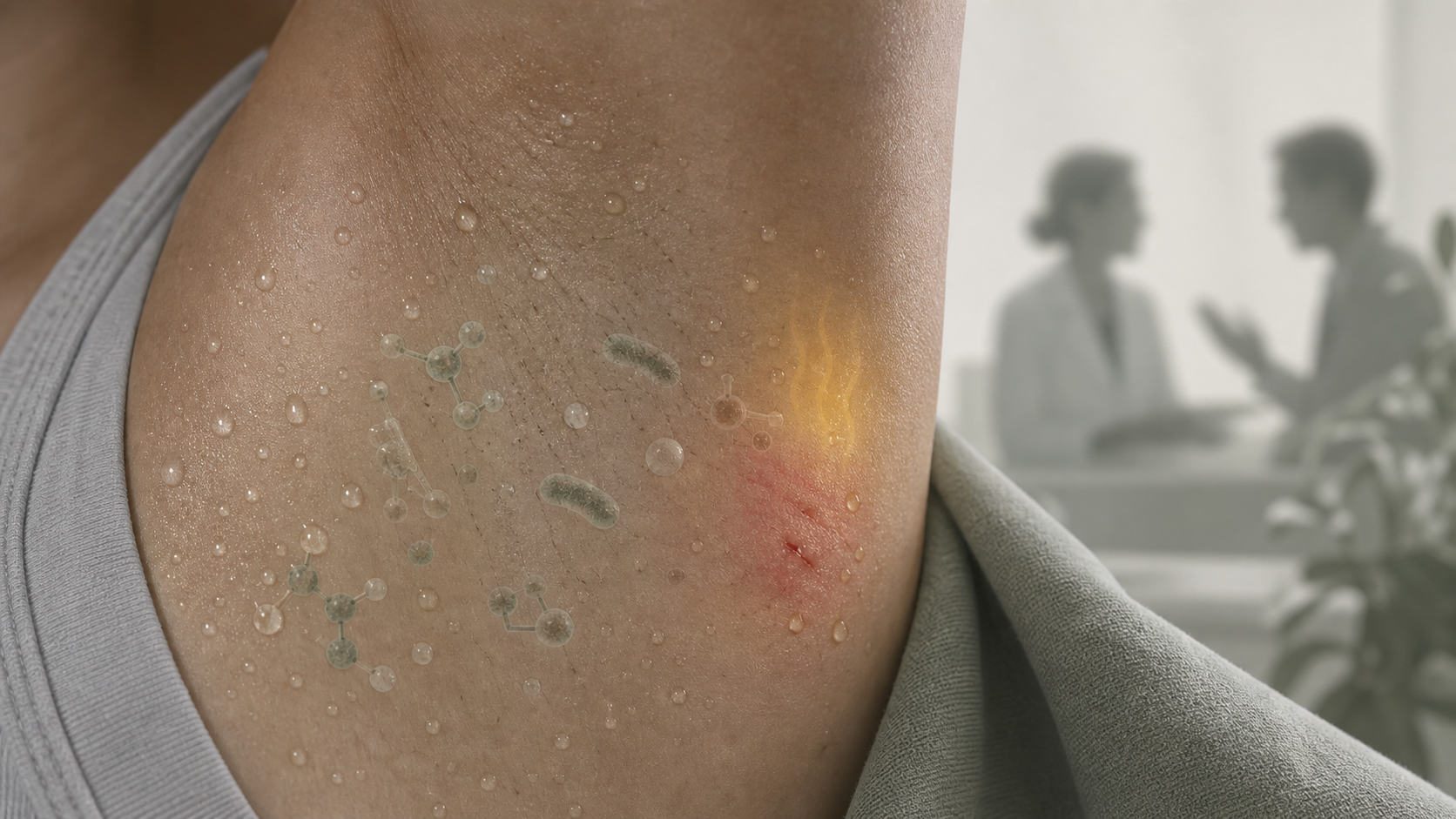
If odor comes with rash, pain, fever, a wound, drainage, repeated boils, sudden heavy sweating, sweating mostly during sleep, or a sudden strong odor change, treat that as a skin or health question, not just a product question.
Common questions
Can octenidine eliminate body odor?
It can help reduce odor in the right product. GoodSweat is one octenidine underarm-cleanser example, but no ingredient eliminates every body odor cause.
Can chlorhexidine eliminate body odor?
Chlorhexidine can reduce skin bacteria in products such as Hibiclens. The label context matters because Hibiclens is an antiseptic skin cleanser.
Is GoodSweat a deodorant?
GoodSweat describes itself as a foaming underarm cleanser used in the shower. It lists Octenidine HCl and odor-binding minerals and is meant to rinse clean.
Is Hibiclens the chlorhexidine example?
Yes. The U.S. DailyMed label for Hibiclens lists chlorhexidine gluconate solution 4.0% w/v and an antiseptic purpose.
Do octenidine or chlorhexidine stop sweat?
No. For wetness, look at antiperspirants. AAD lists aluminum chloride, aluminum chlorohydrate, and aluminum zirconium as antiperspirant ingredients.
Is body odor the same as hyperhidrosis?
No. Body odor is about smell. Hyperhidrosis is excessive sweating. They can overlap, but a wetness problem needs a different conversation than an odor-only product comparison.
Which is better for body odor?
The better question is which finished product fits the odor problem. Underarm cleansers, antiseptic washes, deodorants, and antiperspirants do different jobs.
Related Reading
For the broader ingredient-name tour, read What octenidine is, in plain English. For chlorhexidine name confusion, see Octenidine vs chlorhexidine: read the active ingredient first. For product-name examples, see What octenidine product names mean.
Sources And Review
Last reviewed on 2026-05-28. Sources include MedlinePlus sweat and hyperhidrosis context, American Academy of Dermatology deodorant and antiperspirant guidance, MSD Manual bromhidrosis context, a Scientific Reports paper on thioalcohol production in body odor, GoodSweat product information, a DailyMed Hibiclens chlorhexidine label, and Schulke octenisan wash-lotion information. Editorial review is source review, not a personal medical review.