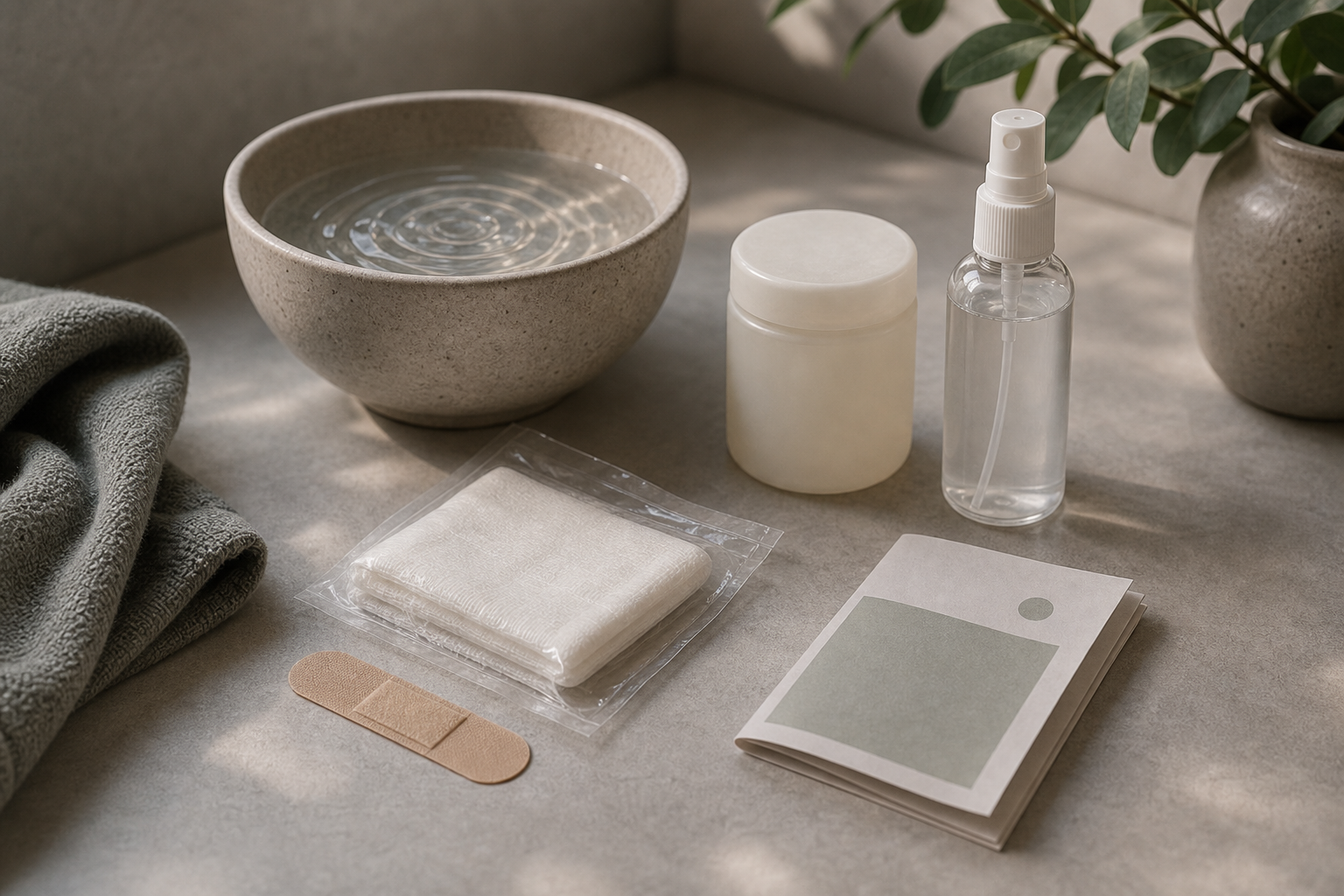
For a minor cut or scrape, start with basic first aid, then check the exact Octenisept bottle or leaflet. The wound type, body site, dirt, depth, bleeding, and the product’s own directions matter before any antiseptic spray.
Public first-aid sources usually begin with simple steps such as controlling bleeding, rinsing or cleaning the wound, protecting it, covering it when needed, and watching for infection. Octenisept is a specific antiseptic product family with its own composition, directions, and warnings.
First Aid Comes Before The Spray Bottle
A small clean scrape and a deep puncture do not need the same care. A kitchen nick, road rash, animal bite, burn, surgical wound, diabetic foot wound, and child’s wound all need different judgment.
For ordinary minor cuts and scrapes, public first-aid sources emphasize basics: clean hands, stop bleeding when needed, rinse or clean the wound, protect it, cover it when appropriate, change dressings, and watch for infection. Those basics come first.
Then check the Octenisept package. An Australian TGA record for an Octenisept spray bottle lists octenidine hydrochloride 1 mg/mL and phenoxyethanol 20 mg/mL. A Schulke octenisept product page lists octenidine dihydrochloride and 2-phenoxyethanol in the solution. Those facts help identify the product family; the package in your hand decides the directions and warnings.
Product Jobs In A First-Aid Kit
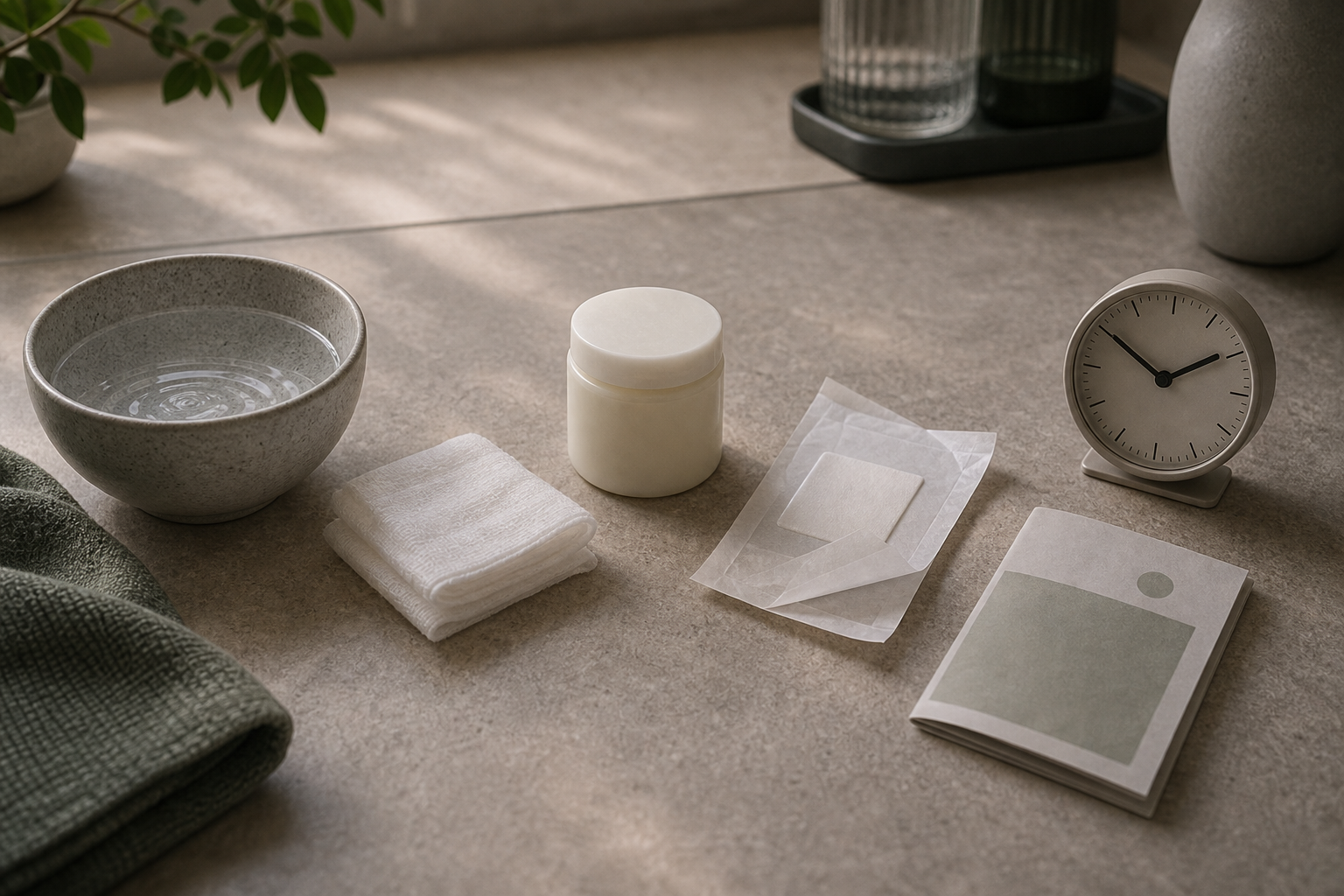
Compare first-aid products by what they are for:
First-Aid Product Jobs
| Product or object | What to check | |
|---|---|---|
| Clean running water MedlinePlus; NHS | Often used in basic minor-wound cleaning. | Is the wound minor enough for home care? |
| Sterile saline Product label | A rinse product, often simple and non-medicated. | Is it sterile, and is it for wound wash? |
| Octenisept TGA; Schulke | An antiseptic product; cited records list octenidine plus phenoxyethanol. | Check the exact product, country, body site, directions, and warnings on your package. |
| Petroleum jelly or ointment First-aid source; product label | May be part of some minor-wound care. | Is it appropriate for this wound and your skin history? |
| Dressing or bandage First-aid source | Protects the area and keeps it clean. | How often should it be changed, and when should you call for help? |
Before You Spray Anything
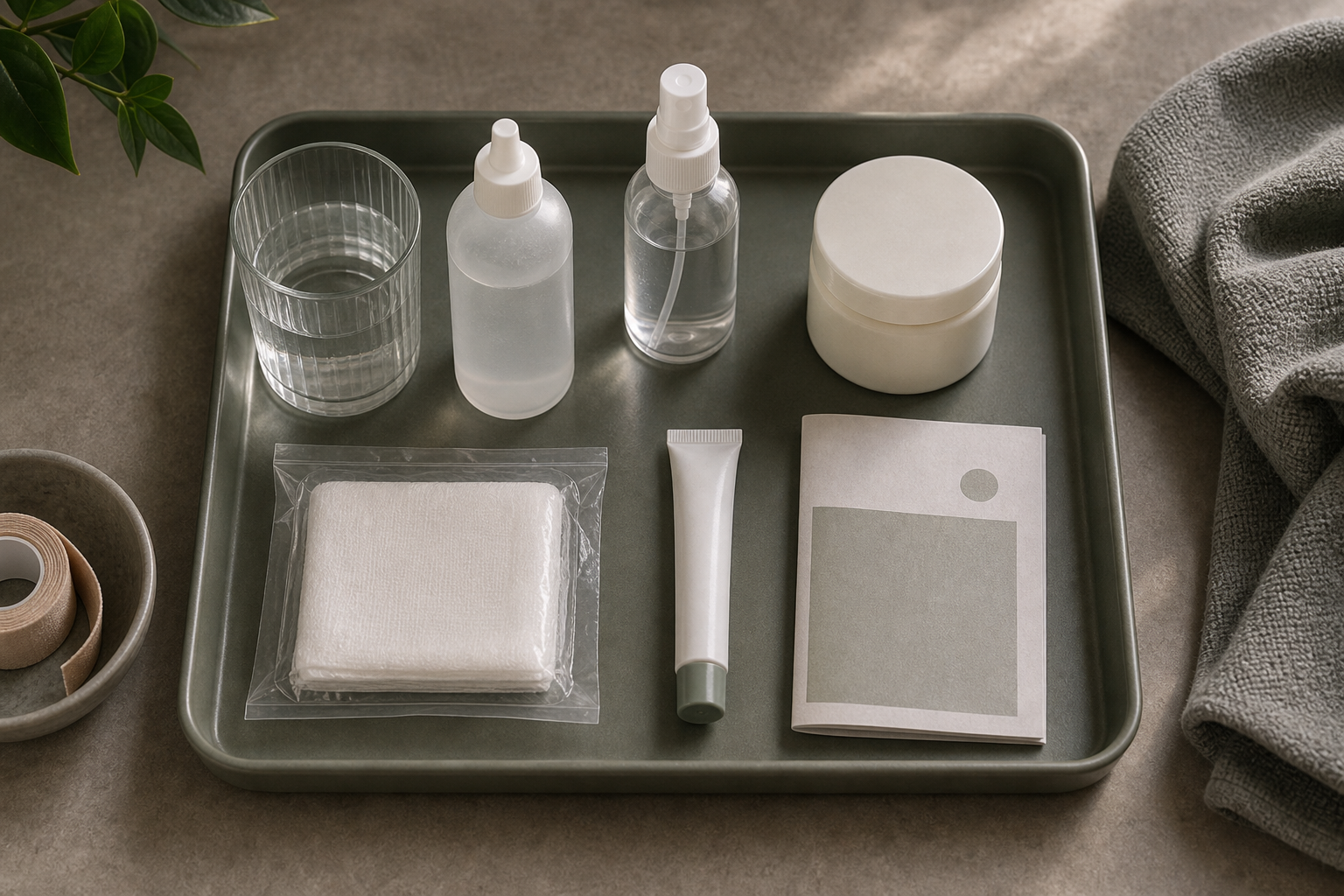
Pause for a quick check:
- How did the wound happen?
- Is it shallow or deep?
- Is it a bite, puncture, burn, crush injury, road rash, or dirty wound?
- Is there debris that is hard to remove?
- Is bleeding controlled?
- Is it near an eye, ear, mouth, genital area, joint, or surgical site?
- Is the person a child, pregnant, diabetic, immunocompromised, or dealing with poor circulation?
- What does the product label say about body site, open tissue, mucous membranes, eyes, ears, swallowing, children, allergy, and when to stop?

Common Questions
Common questions
Can I use Octenisept on a cut?
Read your exact label and look at the wound type. A simple scrape is different from a puncture, bite, burn, deep wound, dirty wound, chronic wound, or surgical wound.
Is Octenisept just saline?
No. Cited Octenisept examples list octenidine plus phenoxyethanol. Treat it as an antiseptic product with its own directions and warnings.
What if it burns or the wound looks worse?
Stop using it until you can ask a pharmacist or clinician. Worsening pain, redness, swelling, drainage, fever, or strong irritation needs help.
Can I use it near eyes or ears?
Eyes, ears, mucous membranes, and sensitive body sites need the exact label and qualified advice.
What should I show if I ask for help?
Show the product bottle or a clear label photo, how the wound happened, when it happened, symptoms, medical conditions, and any products already used.
Related Reading
For piercing-related label checks, read How to clean a piercing with Octenisept. For product-name basics, see Octenidine product names and label types.
Sources And Review
Last reviewed on 2026-05-26. Sources include MedlinePlus and NHS minor-wound first-aid guidance, TGA and Schulke Octenisept product records, and U.S. Poison Help exposure guidance. Editorial review is source review, not a personal medical review.