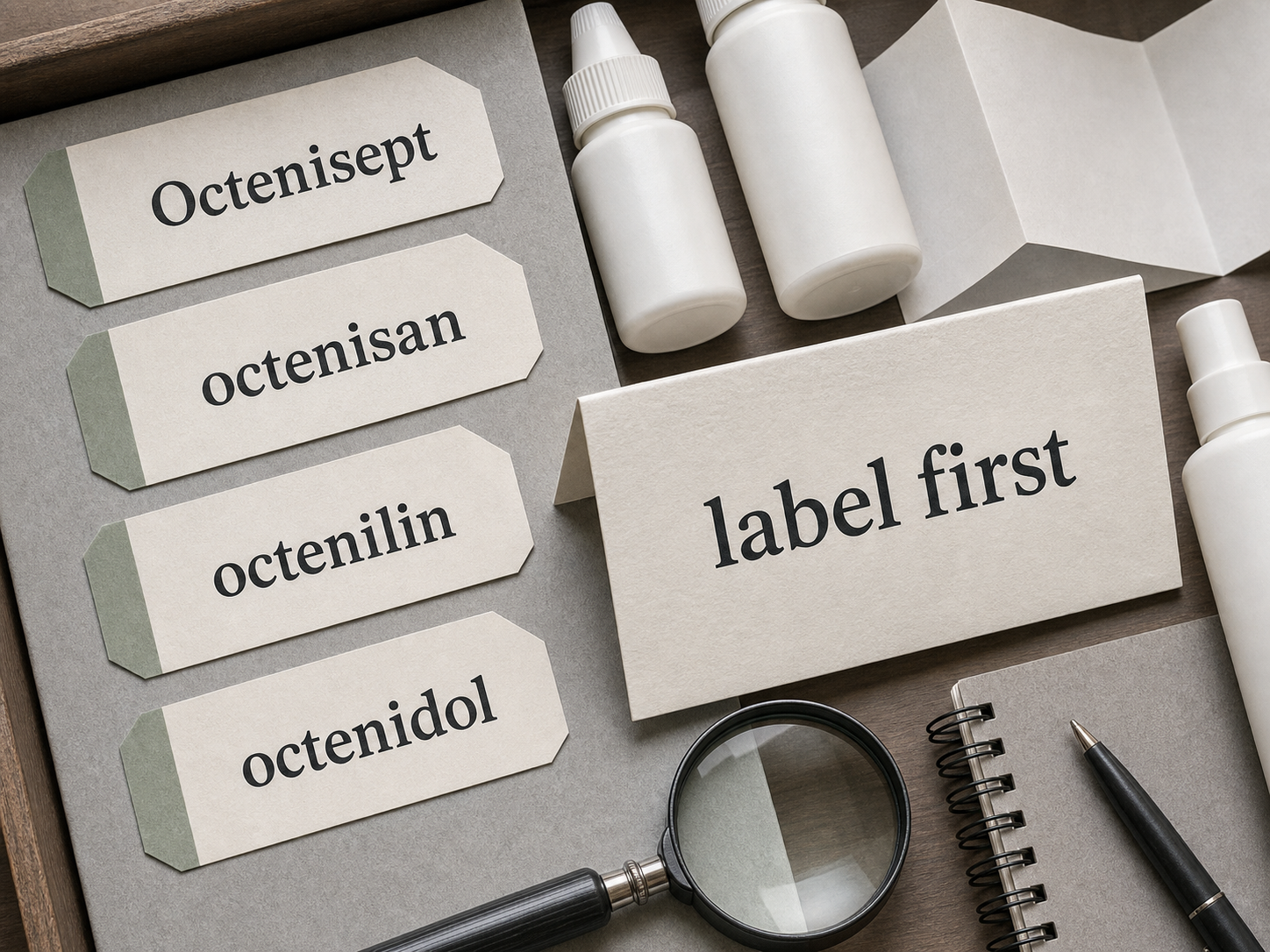
If you saw Octenisept, octenisan, octenilin, octenidol, or another octenidine-looking name, treat the name as a starting point. It helps you find the product and the ingredient details.
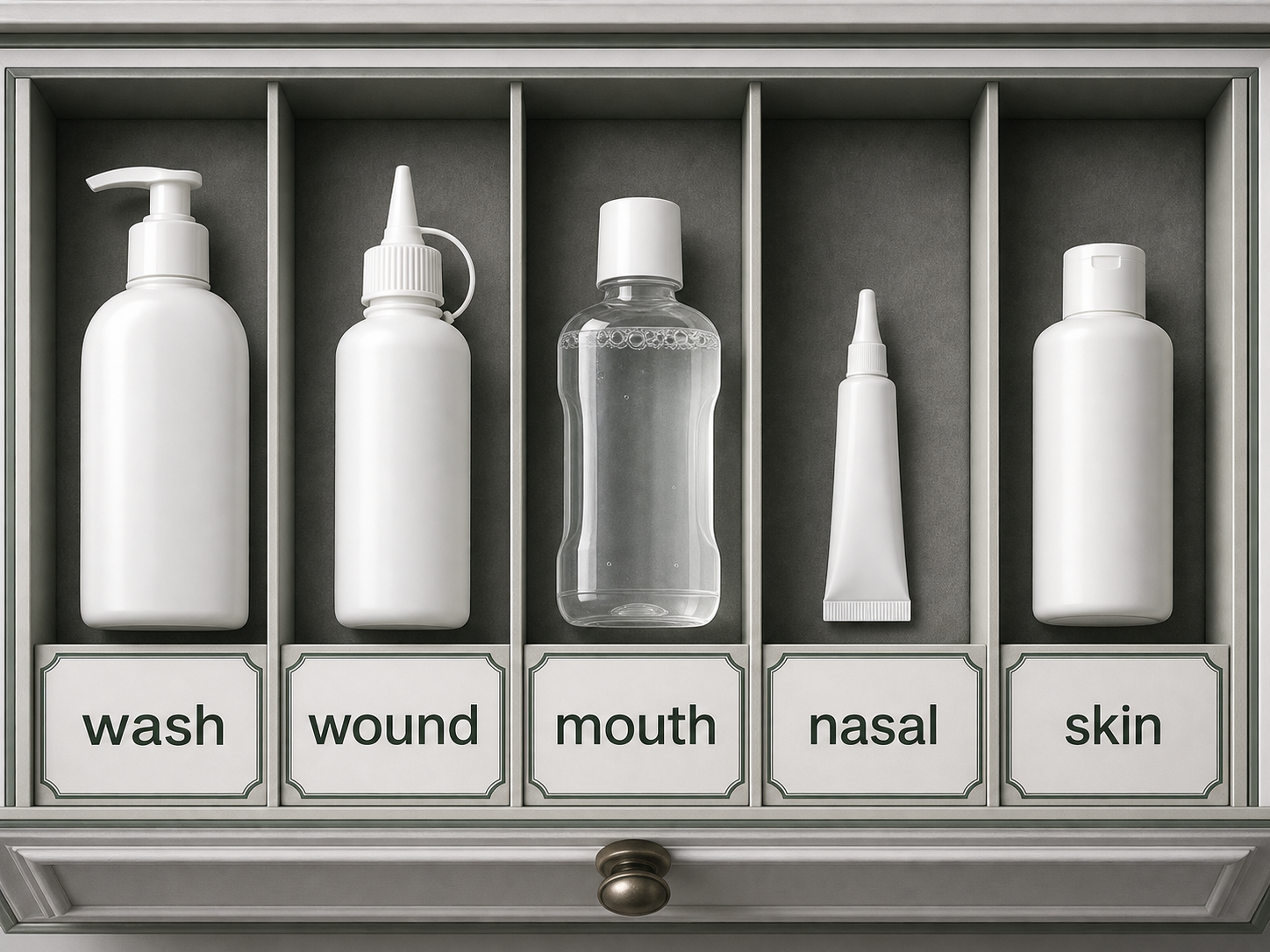
The useful first question is plain: what kind of product is this? A wash lotion, mouth rinse, wound-irrigation solution, nasal gel, skin antiseptic, and alcohol skin prep can all need different warnings and different help.
Octenisept is a product name, not a synonym for every octenidine product. Some Octenisept records list octenidine hydrochloride with phenoxyethanol, but the practical details still come from the exact country, product form, package, or leaflet.
Why The Name Can Mislead You
Octenidine is an ingredient family name. Finished products can use related names while doing different jobs.
For example, Australian medicine records list an Octenisept spray-bottle product with octenidine hydrochloride and phenoxyethanol. A Schulke page for octeniderm colourless describes an alcohol-containing skin antiseptic. A Schulke page for octenilin wound irrigation solution lists Octenidine HCl among the ingredients and describes it as a preservative in that product. The octenisan wash-lotion page is a different product type again.
These examples help you recognize a name. The package, leaflet, or product page carries the practical details.
Sort The Product Before You Compare Names
Name Clue, Label Check
| Name you may see | What to check next | |
|---|---|---|
| Octenisept | Often seen with octenidine plus phenoxyethanol examples. | Check the local label for body site, superficial-use wording, eyes, ears, swallowing, and wound language. |
| octeniderm colourless | An alcohol-containing skin antiseptic example. | Check alcohol content, flammability wording, external-use limits, and procedure context. |
| octenilin | A wound-product name family. | Check whether octenidine is listed as an active ingredient, preservative, or other ingredient in that one formula. |
| octenisan | A wash or nasal-product name family. | Check the body site, duration language, eye and ear cautions, and whether supervision is mentioned. |
| octenidol | A mouth-care name example. | Check dental, mouth, throat, swallowing, and child-use wording. |
What To Look For On The Package
Read the product in front of you, not a remembered name from another page.
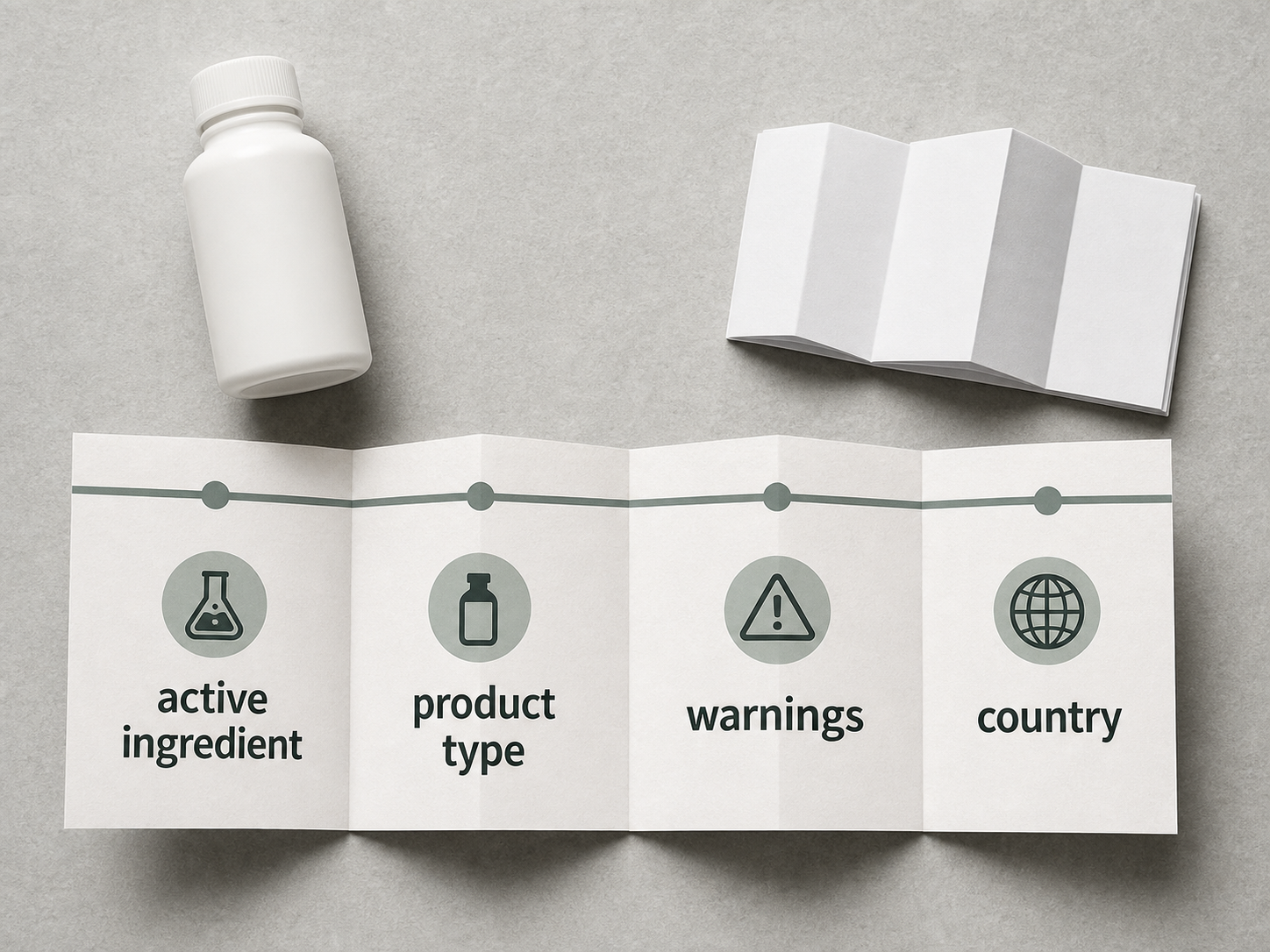
- Active ingredients. Look for octenidine hydrochloride, octenidine dihydrochloride, Octenidine HCl, and any other active ingredients.
- Co-ingredients. Phenoxyethanol, alcohols, surfactants, gels, fragrances, and other ingredients can change the warning language.
- Product type. Separate washes, wound products, mouth products, nasal products, skin antiseptics, and alcohol skin preps.
- Body site. Skin, mouth, mucosa, wound, nasal, eye, ear, genital, and procedure wording should not be guessed from the name.
- Warnings. Look for allergy, swallowing, age, pregnancy, eye, ear, duration, broken-skin, and “ask a doctor” wording.
- Country and contact details. A country-specific record or leaflet may not match the product you have.
Medicine labels can list active ingredients, uses, directions, warnings, storage, expiry, batch number, and sponsor contact details. If the information you need is missing, a health professional, sponsor, distributor, or regulator can often help.
When The Country Is Different
An Australian register entry, European list, Singapore product page, or UK product page can help you recognize a name. It does not mean the product is available in your country or identical to a product sold elsewhere.
This matters most when the question is personal: a wound, procedure, child, pregnancy, mouth, eye, ear, mucosal area, allergy history, or exposure. Those questions need the exact product and a person who can help.
A Simple Script To Use
If you are asking someone for help, start with the package.

Common Questions
Common questions
Are all products with octenidine in the name the same?
No. Treat each finished product separately. A wash, mouth product, wound product, nasal gel, and alcohol skin prep can have different ingredients, strengths, body sites, and warnings.
Does Octenisept mean every octenidine product has phenoxyethanol?
Some Octenisept examples list octenidine with phenoxyethanol, but another product name or country can have different details.
Is octenilin an antiseptic because it contains octenidine?
Read the specific product page or package. In some octenilin material, Octenidine HCl is listed as a preservative in that formula rather than the main antiseptic claim.
Can I use a product page from another country?
Use it to recognize the name and product family. Product status, directions, warnings, and availability can be country-specific.
What if the label is not clear?
Ask a pharmacist, doctor, dentist, manufacturer, sponsor, distributor, or local regulator to help identify the active ingredient, product type, warnings, and country.
Related Reading
For a quick product-context overview, read What is octenidine used for?. For ingredient-level basics, read What octenidine is, in plain English. For a side-by-side comparison with Hibiclens and other chlorhexidine products, see Octenidine vs chlorhexidine: what to know. For category language, see Antiseptic, antibiotic, or disinfectant? What the words mean.