If you are comparing octenidine with Hibiclens, start with the name: Hibiclens is a U.S. chlorhexidine gluconate skin cleanser, not an octenidine product.
That fact can keep the conversation on track. For questions about skin, mouth, wounds, procedures, pregnancy, or reactions, bring the exact product and your specific concern to a pharmacist, dentist, clinician, nurse, or poison-control specialist.
The names are easy to mix up
Octenidine and chlorhexidine are not the same ingredient. FDA’s substance record lists OCTENIDINE HYDROCHLORIDE and includes “octenidine dihydrochloride” among its synonyms. That kind of ingredient record does not mean a finished product has been reviewed or approved.
That distinction matters because patients do not use ingredient records. They use a bottle, packet, leaflet, dental rinse, clinic instruction sheet, or photo of a label taken in a pharmacy. The finished product is where the practical questions live.
Hibiclens is one familiar U.S. example on the chlorhexidine side. Its DailyMed label lists chlorhexidine gluconate solution 4.0% w/v, with “antiseptic” given as its purpose. ChloraPrep is another chlorhexidine label, but it is a different kind of product: chlorhexidine gluconate with isopropyl alcohol for patient preoperative skin preparation. A chlorhexidine gluconate 0.12% oral rinse is a different dental product again.
Octenidine turns up in different product records and leaflets. An Australian TGA record lists an OCTENISEPT product containing octenidine hydrochloride 1 mg/mL and phenoxyethanol 20 mg/mL. A Malaysian Octenisept consumer leaflet names octenidine hydrochloride and phenoxyethanol, and tells readers to follow the instructions of a doctor or pharmacist. Manufacturer pages for octenidol and octeniderm describe other product categories.
Why U.S. readers often know chlorhexidine first
Many U.S. readers come to octenidine after hearing a familiar chlorhexidine name first: Hibiclens, ChloraPrep, CHG, or a chlorhexidine mouth rinse. That does not make chlorhexidine the main comparison for every patient question. It mostly reflects the fact that U.S. product labels are easier to find for these chlorhexidine products because DailyMed carries them.
Octenidine is more likely to appear in non-U.S. product registers, patient leaflets, and manufacturer pages. That can help you identify a product, but it does not show that the product is available, approved, or appropriate in another country.
Where the product type changes the question
The two ingredient families show up in similar-looking settings, but those settings do not collapse into one shared answer.
- Skin cleanser: Hibiclens is a U.S. chlorhexidine gluconate skin-cleanser label.
- Pre-procedure skin prep: ChloraPrep is a U.S. chlorhexidine gluconate plus isopropyl alcohol label. Octeniderm colourless is a manufacturer-listed octenidine dihydrochloride plus alcohol product.
- Oral rinse: DailyMed chlorhexidine 0.12% oral rinse labels discuss dental use, staining, tartar, and altered taste. The current Schulke octenidol product information sheet presents an octenidine mouth-rinse product, and includes manufacturer-supplied information about tooth discoloration.
- Wound or mucous-membrane context: TGA and Malaysian Octenisept records describe specific octenidine plus phenoxyethanol products. A general web comparison cannot tell you whether any of them matches a particular wound, procedure, body site, or local label.
The product category is where a question begins. It is not where the question ends.
What the labels and records can tell you
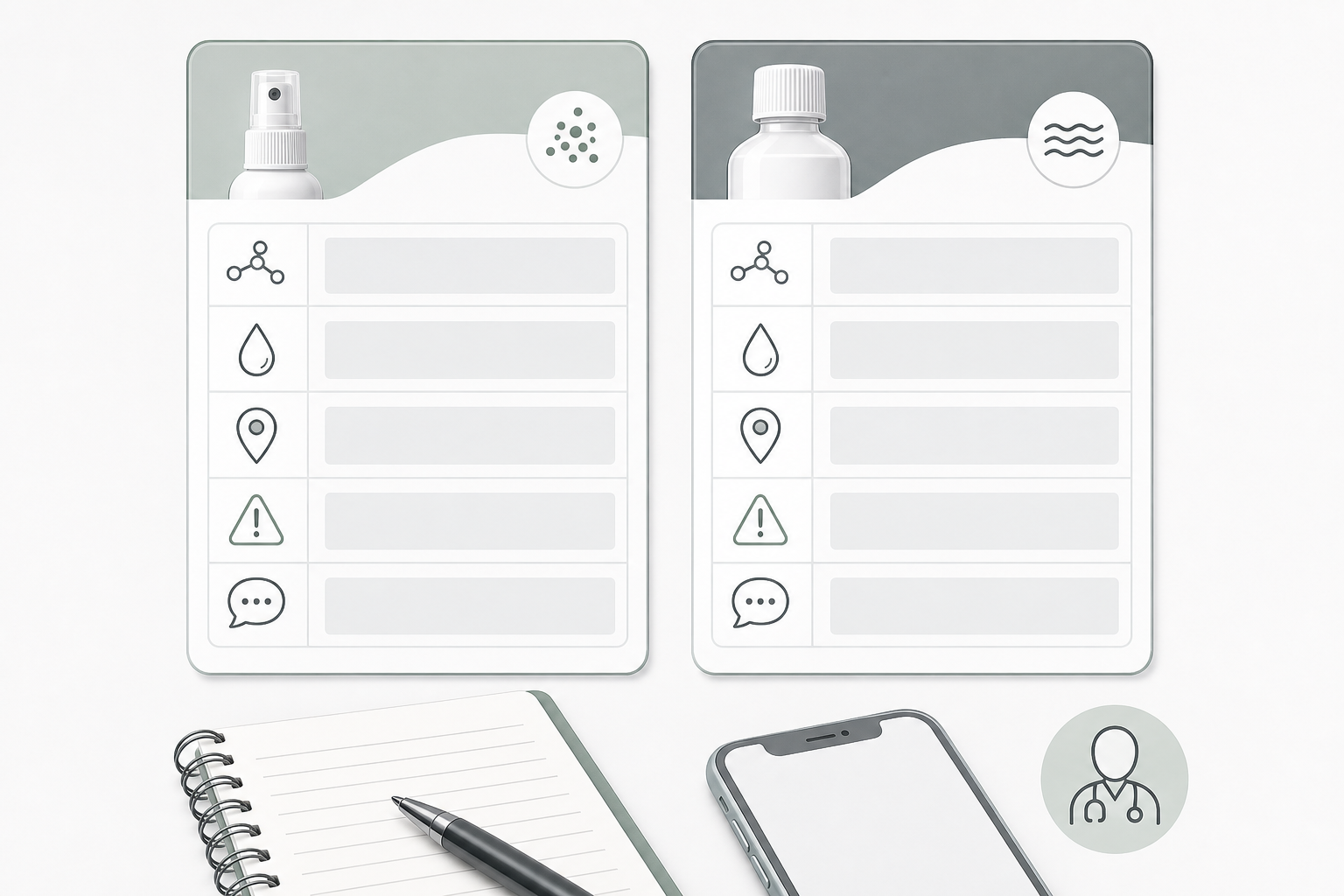
The table is meant to sharpen questions, not choose a product:
| Octenidine question | Chlorhexidine question | |
|---|---|---|
| Name match FDA GSRS; DailyMed | FDA's substance record lists octenidine hydrochloride and synonyms including octenidine dihydrochloride; it does not approve a finished product. | DailyMed labels identify finished chlorhexidine products such as Hibiclens, ChloraPrep, and chlorhexidine oral rinse. |
| Hibiclens DailyMed HIBICLENS label | Not an octenidine product; bring the octenidine product label or leaflet if that is what is being discussed. | DailyMed lists HIBICLENS as chlorhexidine gluconate solution 4.0% w/v. |
| Allergy history FDA alert summary | Bring any antiseptic reaction history to a pharmacist or clinician before comparing products. | FDA warns that rare but serious allergic reactions have been reported with chlorhexidine gluconate skin antiseptic products. |
| Body site TGA; Malaysia leaflet; DailyMed labels | Current Octenisept records describe specific octenidine plus phenoxyethanol products; check the local leaflet or register for the exact body-site wording. | U.S. chlorhexidine skin labels can warn against contact with eyes, ears, mouth, genital area, meninges, or open skin wounds, depending on the product. |
| Oral rinse Schulke octenidol; DailyMed oral rinse | Current octenidol information is a manufacturer product sheet for that product; your dentist can tell you what matters for your mouth. | DailyMed chlorhexidine 0.12% oral rinse labels warn about staining, tartar, altered taste, and bitter taste. |
| Pregnancy or breastfeeding NHS; product leaflets | The question needs the local octenidine product leaflet and a clinician or pharmacist who knows you. | NHS has UK-specific patient information for chlorhexidine in pregnancy and breastfeeding; it does not answer octenidine questions. |
What This Comparison Can Help With
Questions to bring to a professional
A short, specific question is much easier to answer than a long comparison.
When to ask before comparing
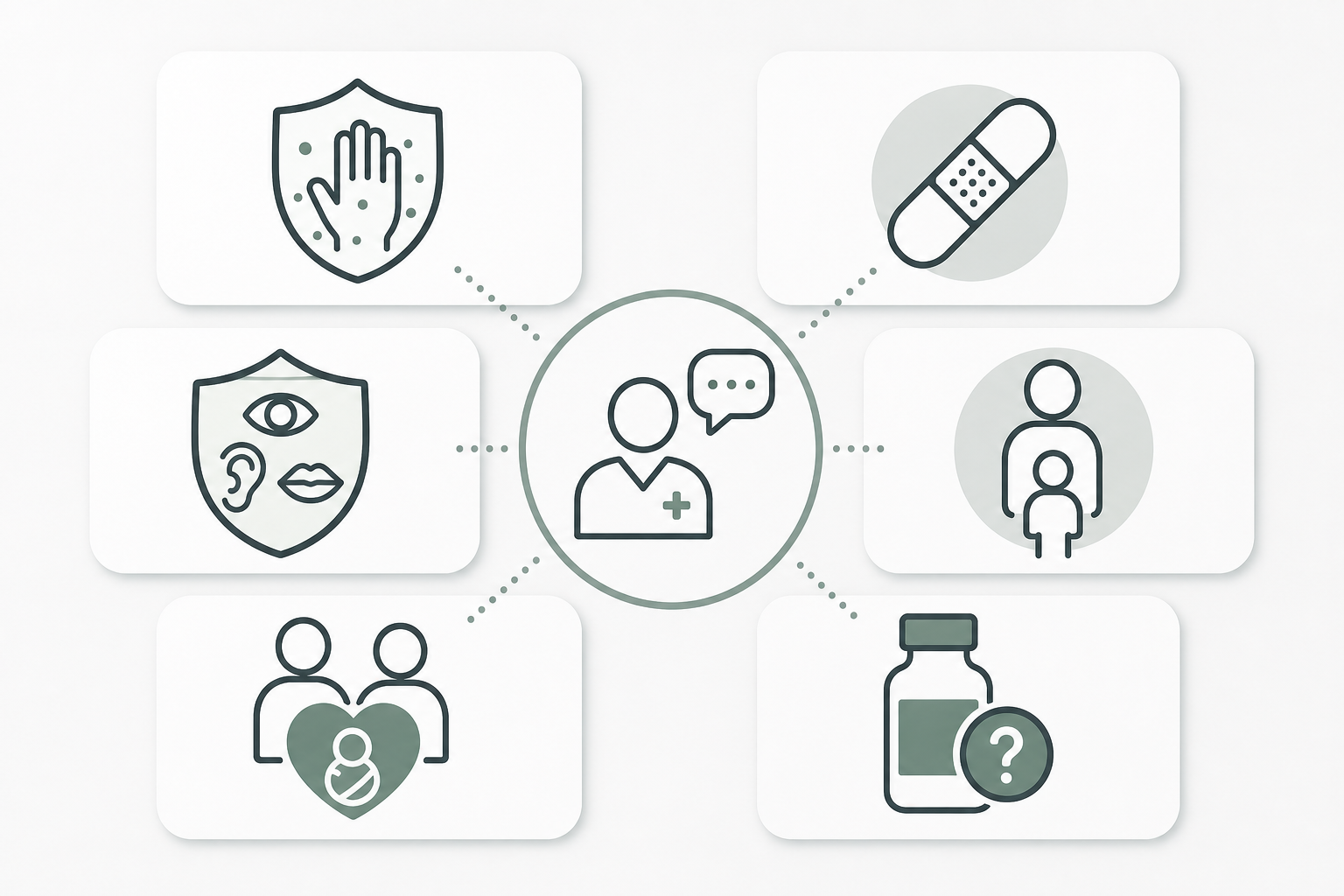
Some questions should go straight to a professional or a poison-control line.
Allergy history belongs in the conversation early. If you have had rash, hives, swelling, wheezing, or another reaction after an antiseptic, skin prep, prescription mouthwash, medical device, or procedure, say that before comparing products. For serious allergic-reaction symptoms, seek medical attention immediately or call emergency services.
Wounds and procedures also need personal context. Large or deep wounds, bites, stuck objects, signs of infection, surgical-site changes, or unclear aftercare instructions belong with a care team.
Questions about pregnancy, breastfeeding, infants, young children, eyes, ears, mouth, genital areas, mucous membranes, deep wounds, burns, medical devices, and accidental exposure are not places to rely on a general web comparison.
Where To Look
Use the ingredient record to match a chemical name.
Use the product label or patient leaflet for the finished product’s ingredients, directions, and warnings.
Use a product register to see a country-specific listing.
Use a manufacturer page for current product composition or product-category information.
Use a clinical guideline for professional context.
Use a poison-control resource for exposure questions.
Octenidine versus chlorhexidine is not one large yes-or-no question. It is a set of smaller questions about the product, body site, warning history, and person using it.
Common questions
Is Hibiclens chlorhexidine?
Yes. The U.S. DailyMed label lists HIBICLENS as chlorhexidine gluconate solution 4.0% w/v. It is not octenidine, and it is not the same product as ChloraPrep or a chlorhexidine mouth rinse.
Is octenidine the same as chlorhexidine?
No. FDA's substance record lists octenidine hydrochloride and synonyms including octenidine dihydrochloride. Chlorhexidine gluconate is a different active ingredient used in products such as Hibiclens, ChloraPrep, and some oral rinses.
I had a reaction to chlorhexidine. Should I use octenidine instead?
Tell a pharmacist, dentist, nurse, or clinician what happened, and bring the exact product with you. FDA's chlorhexidine warning supports taking that history seriously.
Will an octenidine mouth rinse stain my teeth like chlorhexidine?
Ask your dentist with the exact rinse in hand. DailyMed chlorhexidine 0.12% oral rinse labels warn about staining, tartar, and altered taste. An octenidol product sheet is manufacturer information for that specific product, so your dentist can help decide what matters for your mouth.
Can I use either ingredient while pregnant or breastfeeding?
That is a clinician or pharmacist question. NHS provides UK-specific patient information for chlorhexidine, but it does not answer octenidine product questions, co-ingredient questions, or another country's label.
Are octenidine products sold in U.S. pharmacies?
This article does not track where products are sold. FDA's substance record helps you match octenidine names, but it does not establish that a finished octenidine product is approved, sold, or appropriate in the United States.
What if I swallowed some or got it in my eye?
Do not spend time comparing ingredients. In the United States, call Poison Help at 1-800-222-1222. For severe symptoms, use 911 or local emergency services. Outside the United States, use local poison-control or emergency services.
Related reading
For a consumer-side comparison, read Octenidine vs Hibiclens and chlorhexidine: what to know. For appointment-prep checklists and wound context, see Questions to ask before using an octenidine-containing product. For product-name examples, see Octenidine product names patients may hear about.
Sources and review
Last reviewed: 2026-05-13. Sources include FDA ingredient pages, DailyMed chlorhexidine product labels, FDA’s chlorhexidine allergy alert as reposted by the American Society of Anesthesiologists, Australian and Malaysian octenidine product pages, manufacturer product pages, U.S. Poison Help, MedlinePlus wound information, NICE surgical-site guidance, and NHS UK chlorhexidine pregnancy and breastfeeding information.