CHG means chlorhexidine gluconate. Octenidine is a different ingredient name.
That clears up a common mix-up. Hibiclens and ChloraPrep are chlorhexidine gluconate examples. After that, compare the exact product, body site, warning language, and country.
The Cleanest Difference
Hibiclens lists chlorhexidine gluconate solution 4.0% w/v. ChloraPrep One-Step lists chlorhexidine gluconate 2% w/v and isopropyl alcohol 70% v/v. Chlorhexidine gluconate 0.12% oral rinse labels are dental product labels.
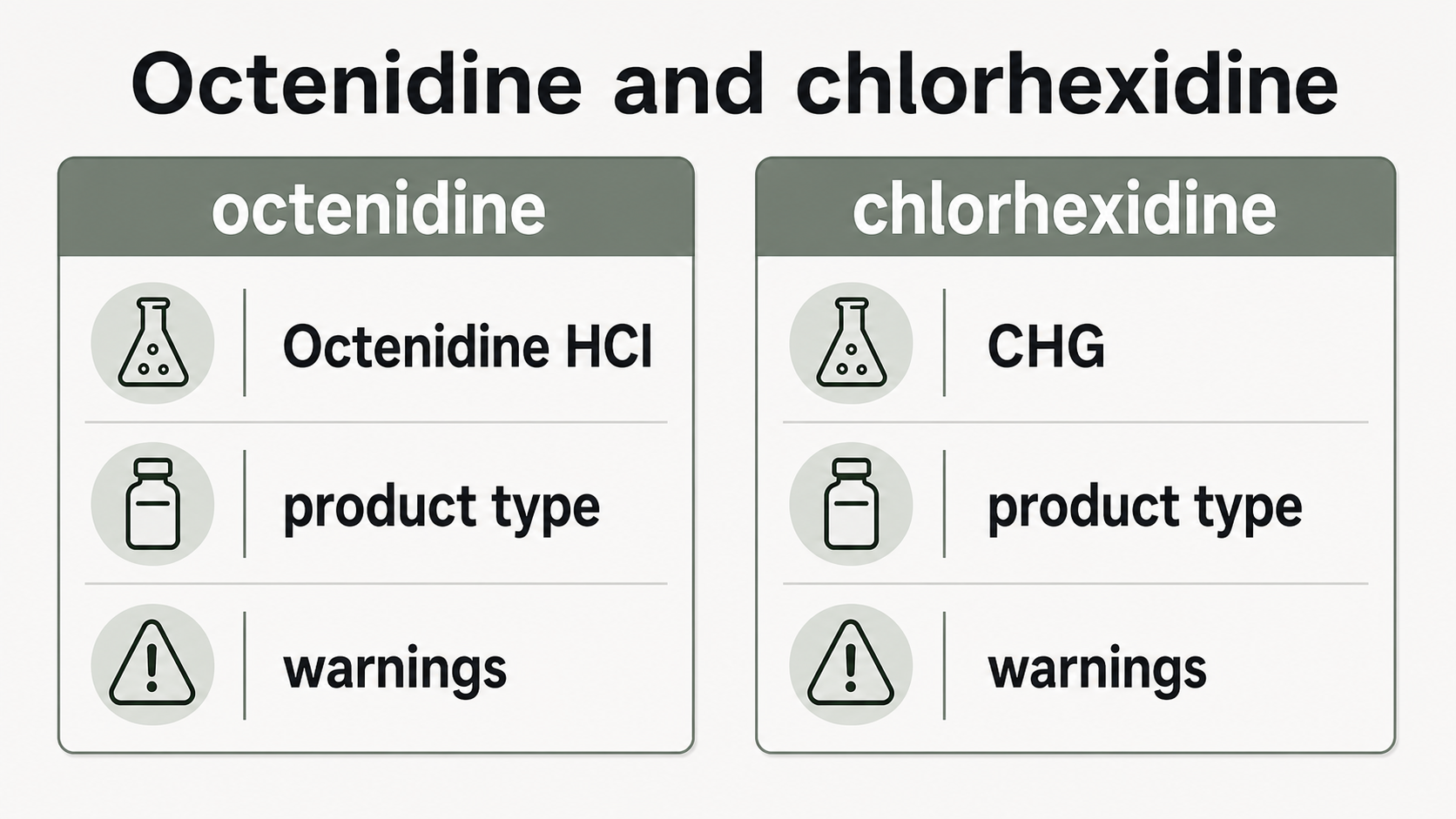
Octenidine is a different ingredient family. You may see octenidine hydrochloride, octenidine dihydrochloride, or Octenidine HCl. An Australian Octenisept register entry lists octenidine hydrochloride and phenoxyethanol. Schulke pages also show octenidine examples in skin, mouth, and wound-product settings.
Those facts help you identify the product family. They do not tell you which product to choose.
Compare Labels, Not Just Names
What The Label Can Tell You
| Octenidine examples | Chlorhexidine examples | |
|---|---|---|
| Ingredient wording | Octenidine hydrochloride, octenidine dihydrochloride, or Octenidine HCl. | Chlorhexidine gluconate, often shortened to CHG. |
| Familiar examples | Octenisept, octeniderm, octenilin, octenisan, and octenidol appear in non-U.S. examples. | Hibiclens, ChloraPrep, and chlorhexidine oral rinse appear in U.S. DailyMed labels. |
| Product type | Topical solution, alcohol skin antiseptic, wash, wound product, mouth product, or another form. | Skin cleanser, surgical skin prep, oral rinse, or another chlorhexidine product. |
| Warnings | Read the octenidine product's own label or leaflet. | Read the chlorhexidine product's own label, especially allergy, eye, ear, mouth, infant, and wound language. |
| Personal question | Show the exact octenidine product if you have one. | Show the exact chlorhexidine product and mention any past reaction. |
Why Hibiclens And ChloraPrep Are Different Products
Hibiclens and ChloraPrep both help explain CHG, but they are not interchangeable examples.
Hibiclens is a chlorhexidine gluconate skin-cleanser label. ChloraPrep is a chlorhexidine gluconate and isopropyl alcohol surgical skin-prep label. Their active ingredients, alcohol content, product form, flammability language, and directions differ.
That is the larger lesson. Even inside one ingredient family, the finished product matters.
Past Reactions Matter
If you have reacted to CHG, chlorhexidine, octenidine, alcohol, fragrance, adhesive, iodine, a wound product, or an unknown antiseptic before, the name comparison is not enough.
Say what happened in ordinary words: rash, hives, swelling, breathing trouble, burning, eye contact, swallowing, or another symptom. Have the product name, active ingredient, and package ready if you can. A pharmacist, dentist, nurse, doctor, or poison-control expert can use that information much better than a memory of the brand name alone.
What To Check Before You Compare Products
Keep the package, packet, leaflet, product page, or register entry in front of you. Then check:
- Active ingredient: chlorhexidine gluconate, octenidine hydrochloride, octenidine dihydrochloride, Octenidine HCl, or another name.
- Concentration: the strength on that one label.
- Co-ingredients: alcohol, phenoxyethanol, dye, fragrance, surfactant, gel base, or other ingredients.
- Product type: skin cleanser, surgical skin prep, oral rinse, topical solution, wound product, wash, or another form.
- Body-site wording: skin, mouth, mucosa, wounds, eyes, ears, genital area, infants, or procedure setting.
- Country: U.S. label, Australian register entry, European leaflet, manufacturer page, or another local document.
Labels and medicine guides can list active ingredients, uses, warnings, directions, storage, expiry, batch, and contact details. If those details do not answer your situation, ask.
Common Questions
Common questions
Is octenidine another name for chlorhexidine?
No. Octenidine and chlorhexidine are different ingredient names.
Is Hibiclens the same as CHG?
Hibiclens is a brand-name product whose label lists chlorhexidine gluconate. CHG is short for chlorhexidine gluconate.
Does this comparison show which ingredient is better?
No. It helps you read labels. Effectiveness, suitability, and product choice depend on the exact product and situation.
Can I use octenidine if I reacted to chlorhexidine?
Do not decide that from the names. Tell a pharmacist or doctor what happened and show the product labels.
Can Hibiclens replace an octenidine product?
Treat replacement as a pharmacist or doctor question. Ingredient, product type, body site, wound or procedure context, and warnings can change the answer.
Why does a chlorhexidine oral-rinse label sound different from a skin-cleanser label?
Because it is a different finished product. Dental oral rinses, skin cleansers, and surgical skin preps have different directions and warnings.
Related Reading
For ingredient basics, read What octenidine is, in plain English. For octenidine product-name examples, see What octenidine product names mean. For category language, see Antiseptic, antibiotic, or disinfectant? What the words mean. For patient-side comparison questions, see Octenidine vs Hibiclens and chlorhexidine: questions to ask.